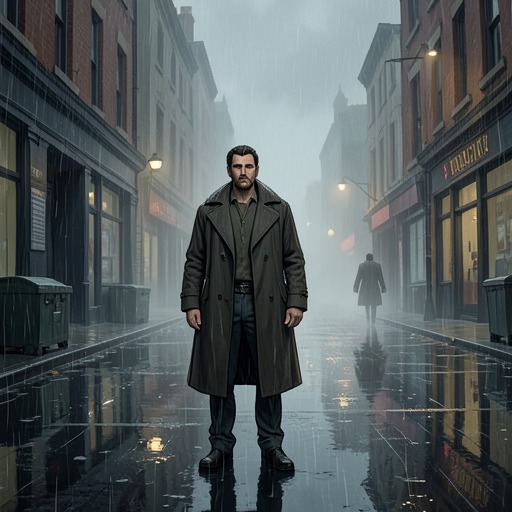
There are no second chances in life, except to feel remorse
The Shadow of the WindThe saying “There are no second chances in life, except to feel remorse” gives a stark frame to a story of lost possibilities: life offers no way to undo what has happened, only the painful recognition that follows. Its placement at the opening of a recollection about Julian Carax’s literary career makes remorse not simply a private feeling but a lens through which missed opportunities, failure, and belated discovery come into view.
Meaning and Form
The sentence is built around an exception that does not soften its first claim. Remorse is not a second chance to change the past; it is the sole thing that remains when the chance to act has passed. The distinction makes the saying both consoling and severe: reflection is still possible, but it cannot restore what was lost.
The blunt movement from “no second chances” to “except to feel remorse” turns the maxim inward. Its subject is not merely fate or misfortune, but the afterlife of decisions in memory. The line also carries a paradox: remorse is the only opportunity left, yet it offers no repair. Its value lies in recognition rather than reversal.
Narrative Context
The saying introduces a first-person recollection of meeting Julian Carax in the autumn of 1933. The narrator, then working for Josep Cabestany, recounts how Cabestany had discovered Carax in Paris in 1927 and secured the rights to publish his novels in Spain and Latin America. The recollection places the maxim beside a career whose promise and reception diverged sharply.
Carax made his living playing piano at Irene Marceau’s hostess bar in the afternoons and writing at night. Marceau used her connections, favours, or threats of disclosure to help him place novels with Paris publishers. Cabestany acquired the Spanish- and Latin-American publishing rights cheaply, with the agreement also requiring Carax to translate his French originals into Spanish himself. Each practical arrangement offered a route for the books to reach readers, but none guaranteed that they would be read.
Failure and Belated Recognition
Cabestany hoped to sell about three thousand copies of each novel. The first two titles he published in Spain sold barely a hundred copies apiece, a commercial failure that might have ended the arrangement. Instead, every two years a new manuscript arrived from Carax, and Cabestany continued to accept it. He maintained that profit was not everything and that good literature deserved support, preserving a commitment to the work despite the poor sales.
The narrator initially could not understand why Cabestany continued publishing novels that lost money. Cabestany answered not with an explanation but by taking one of Carax’s books from his shelf and inviting the narrator to read it. Two weeks later, the narrator had read them all; the question had changed from why Cabestany published so few-selling books to how so few copies could possibly have been sold. That reversal gives the maxim a precise narrative resonance: recognition arrives, but only after the books have already been overlooked. The line therefore opens not just a story of regret, but one in which reading exposes the distance between a work’s worth and the moment when others recognize it.